Visiting a Factory in China
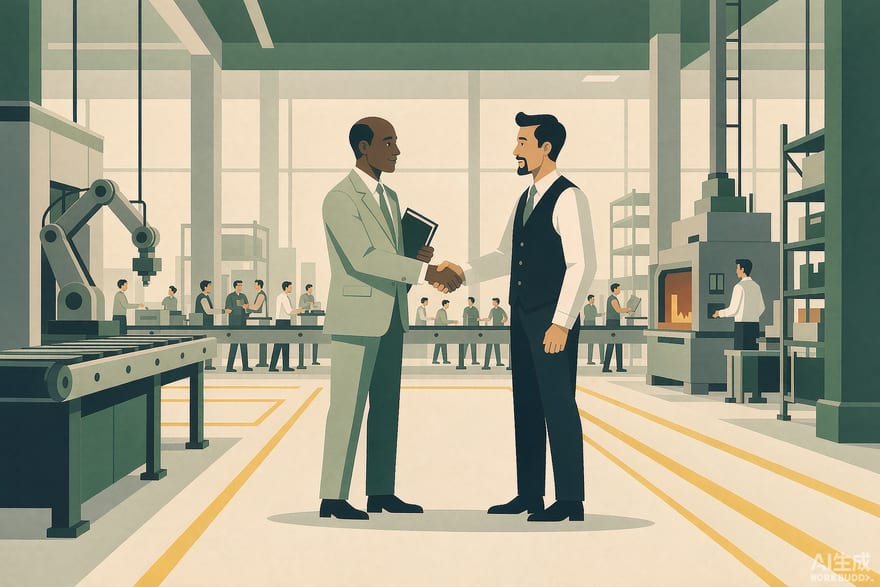
Online supplier directories make sourcing look like a website problem: search, compare, message, order. For anything beyond trivial volumes it isn't. A listing — even a verified one — cannot tell you whether the "factory" is a factory or a trading company with a good camera, whether the workshop matches the photos, or whether the person answering your messages can actually influence production. A visit answers all three in a day. This page walks through what a first factory visit in China actually involves: how it gets arranged, what the day looks like, and what to ask while you're standing on the floor.
Why go at all — what a listing can't tell you
- Factory or middleman? A large share of "manufacturers" on sourcing platforms are trading companies. Some are useful; some add a margin without adding value. On a workshop floor, the difference is visible in about ten minutes — machines, workers, and whether the people you meet actually talk to the production side.
- Profile photos are often other people's factories. Showroom shots and equipment lists circulate. What you see in person, with your own product being discussed, is not reproducible.
- Small buyers get sorted by email. Factories prioritise by order size and by relationship. A buyer who flew in, walked the floor and sat in the meeting is a different category from one more Gmail thread — not because of courtesy, but because the visit signals follow-through.
Arranging the visit
- It goes through a contact, not a front desk. Factories don't take walk-ins. Visits are arranged with your sales contact — by WeChat, or email if that's how the relationship started — and confirmed a few days ahead. Turn up unannounced and you will be received politely in a showroom, and that is all.
- Send context in advance. Your product, target quantity, and what stage you're at (just looking, sampling, comparing quotes). Factories prepare differently for each, and the visit is better when they've prepared.
- Realistic arithmetic: two factory visits in one day is a full day once you count travel — factories sit in industrial zones, often an hour or more outside the city centre even before you leave the city itself. Three in a day happens, but something gets skimmed.
- Interpreter or not? Larger exporters have English-speaking sales staff; at smaller factories, written English is often better than spoken, and the people who know the machines often speak none. A Chinese-speaking companion changes the quality of what you learn — the informal conversation on the way to the workshop is where the real information is.
Getting there
Between cities it's usually high-speed rail — the booking process with a foreign passport is covered in the high-speed rail guide, and the passport-verification step needs doing days before, not on the morning of the visit. The last leg is almost always a car: factories are rarely near a metro station, and your hotel address will not be the factory address. Save the factory's Chinese name and address on your phone — gates are signed in Chinese, and drivers navigate by it.
What the day actually looks like
Visits run to a pattern, with local variations:
- Reception and the showroom. You'll be met, often with tea, and shown finished products and certifications. This part is choreographed — it is the factory's best face.
- The workshop tour. The part with real information: which machines, how many workers, how much work in progress, whether the line matches what they claim to make in-house. If a "manufacturer" keeps you in the showroom and steers away from the floor, that is itself a finding.
- The meeting room. Prices, quantities, lead times, samples — usually with the sales manager, sometimes the boss if the enquiry looks serious. Business cards are exchanged at the start; bring printed ones, they still matter here.
- A meal. Often offered, especially if the visit went well. Going is courteous; you can decline politely and it won't sink anything. If you drink, drink less than your hosts — the afternoon is still yours.
The questions that matter
| Ask | Why it matters |
|---|---|
| MOQ — minimum order quantity | Set before anything else, because it decides whether the relationship can exist at your volumes. Common practice is to quote MOQ per model or per colour; push gently and it sometimes moves for a first order |
| Sample policy | Who pays, how much, and whether the cost comes back off the first order. Commonly charged, often refunded against the order — but it varies, so ask |
| Tooling or mould costs | For customised products this can be the biggest hidden number. Who owns the mould afterwards is worth asking too |
| Lead time | From deposit to ex-factory, and for what quantity. Ask what happens if it slips |
| Payment terms | A deposit with balance before shipment is the common convention (often quoted as 30/70 by T/T), but it is practice, not law, and it is negotiable — especially after a relationship exists |
| Export experience | Which ports they ship from, FOB or CIF, and whether they've exported to your market before — documentation mistakes at this stage cost weeks |
| QC and defects | Who checks, when, and what happens when a batch arrives wrong. The honest answer to this question tells you more about the factory than the showroom does |
What they are assessing about you
The assessment runs both ways, and it helps to know it. The factory is working out: is this buyer real or collecting quotes for a boss back home; roughly what volume is behind the questions; whether this person will pay deposits on time and answer messages after the samples arrive. Being specific — real quantities, real timelines, real questions about process — is what moves you from "quote and forget" to "prepare a proper response".
Red flags buyers report
- The workshop tour keeps not happening — "the line is busy today".
- Pressure to pay a deposit the same day, before samples or a written contract.
- Prices dramatically below every other quote for the same spec — the difference is usually someone else's problem waiting to become yours.
- Vagueness about their own process: the people presenting cannot explain how their product is actually made.
After the visit
Get everything in writing while it's fresh — a pro forma invoice, or at minimum a WeChat summary you both acknowledge. WeChat message history functions as a working record in practice, but the pro forma invoice is the document your bank and the factory's bank will actually work from. Samples then decide the next step; some buyers also bring in a third-party inspection before balance payment on first orders, which is a normal request to make, not an insult.
If you'd rather not do the first one alone
This site is run by a foreign-trade professional based in Shanghai who does exactly this — planning the visit schedule, riding along to the meeting, and handling the Chinese-language follow-up afterwards. It is a small, personally run service in its early stages, not an agency, and the Business Trips & Factories page describes plainly what it does and doesn't cover, with the inquiry form at the bottom of that page.
Planning a factory visit or supplier trip?
I'm a foreign-trade professional based in Shanghai, and I help overseas buyers make contact with factories, plan visit routes and prepare for a sourcing trip. The service area is Shanghai plus roughly 300 km around it — Suzhou, Wuxi, Changzhou, Nanjing, Nantong, Jiaxing, Huzhou, Hangzhou, Ningbo and the surrounding industrial belts. I can meet you at the airport or station, see you settled, and come along on factory and supplier visits across the delta. This is a small, personally run service — not a travel agency. Tell me what you need and I'll reply within one business day, tell you honestly what I can and can't arrange, and confirm anything that costs money before you commit to it.